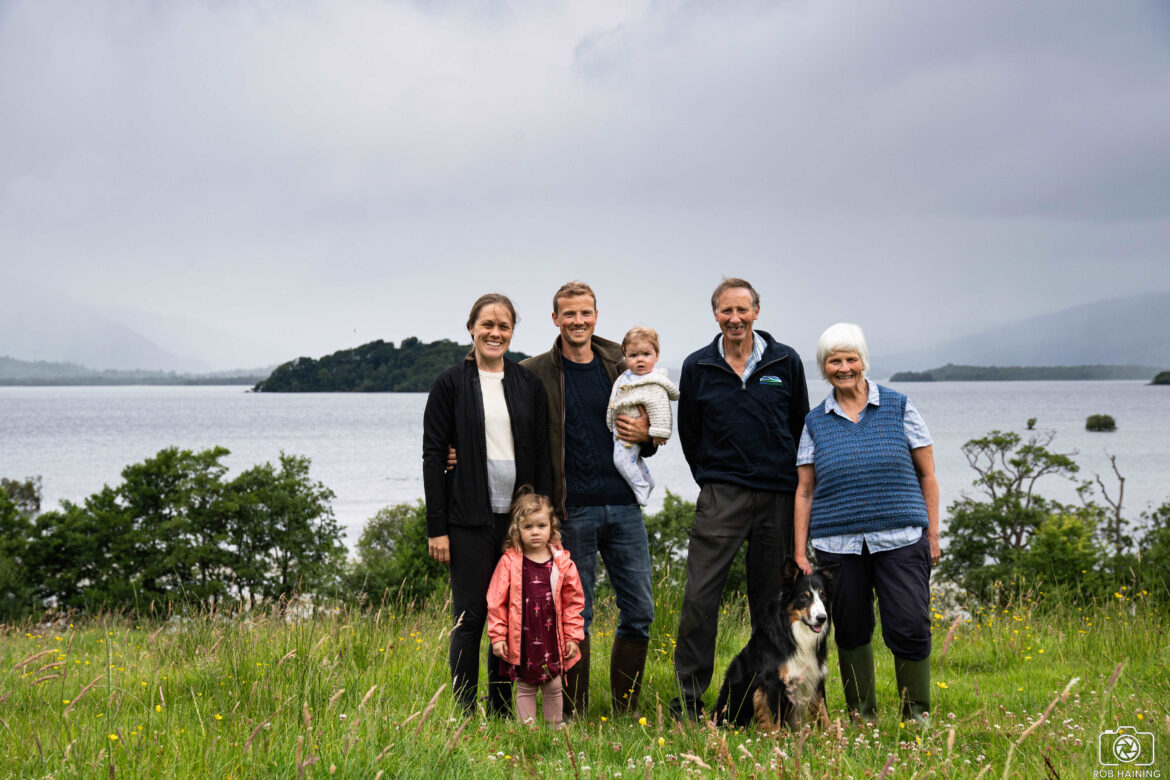
Land Manager and Co-Owner of Portnellan Farm, Freda Scott-Park said: “Being part of the Resilient Farm Network gives us a chance to build on our closed herd and long-term animal data, using that history to understand how the farm can adapt and stay resilient in the years ahead.
“A key focus for us is exploring how our soil structure and grass pastures can be improved to provide grazing resilience and enhanced biodiversity for the future.
“Through the RFN, we’ll also be able to test ideas like small-scale agroforestry, better surface-water management and new approaches to shade and shelter, helping us make informed decisions that benefit both the herd and the wider landscape.”
The National Park Authority’s Resilient Farm Network programme aligns with the Scottish Government’s Academic Advisory Panel’s publication of evidence-based priorities for climate adaptation across Scotland’s agricultural sector. It highlights that resilience is best built through whole‑farm approaches that improve soil health, strengthen land and livestock management, and make use of natural landscape features – supported by farmer‑led knowledge exchange and joined‑up policy. By adopting resilient, regenerative practices, land managers in the National Park can build more stable, productive farming systems that are better equipped to cope with a worsening climate, strengthening the landscapes that support local communities and nature for the long term.
Agriculture Minister, Jim Fairlie MSP said: “The Resilient Farm Network is an exciting opportunity for crofters and farmers within the National Park to take advantage of expertise that will help them to manage land sustainably over the longer term, while restoring nature and increasing their resilience to climate change.
“The evidence and lessons we can learn from the existing RFN farms, and now joined by Glen Finglas, Shemore and Portnellan can benefit the wider agriculture sector, which is a vital part of rural Scotland and our economy.”
The RFN’s approach also strengthens the National Park Authority’s wider landscape‑scale work, including the Loch Lomond & The Trossachs Landscape Connections initiative – funded by The National Lottery Heritage Fund and delivered with RSPB Scotland and Loch Lomond & The Trossachs Countryside Trust. This initiative aims to restore and link some of Scotland’s rarest woodlands while creating opportunities for local communities and supporting rural economies. Through ‘Grazing for Future Nature’, part of Landscape Connections, the National Park Authority will work with farms across the initiative’s focus areas to deliver and develop conservation‑grazing projects that support woodland restoration, improve farmland biodiversity and strengthen native woodland networks.
Farmers and land managers who are members of the RFN will have the opportunity to access training, peer support and funding opportunities, including the Scottish Government’s Nature Restoration Fund for projects linked to nature restoration.
To find out more about the RFN programme, visit the National Park Authority website or complete the Expression of Interest form. For any questions, contact landmanagement@lochlomond‑trossachs
 play_arrow
 play_arrow
 play_arrow




Post comments (0)